Ecommerce / B2B Office Supplies
How this office sign e-commerce site grew average monthly revenue by 59% in three months
OfficeNamePlates.com
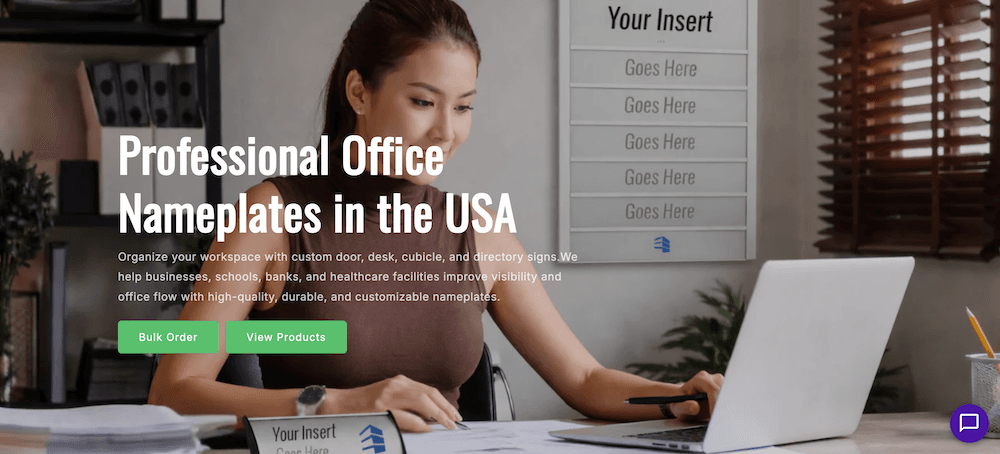
OfficeNamePlates.com is a US B2B store for DIY office signs. The list and traffic existed, but the site converted under 1% of visits and thousands of past buyers had gone cold. We synced Magento data into Klaviyo, tightened on-site capture, reactivated customers, and ran segmented campaigns—moving average monthly sales from about $17K to $27K in three months (about a 59% increase).
Overview
OfficeNamePlates.com sells do-it-yourself office signs to businesses. Their primary buyers include HR managers, operations managers, office assistants, and facility managers. At kickoff, the business was averaging about $17,000 in monthly revenue—with most upside sitting in data hygiene, lifecycle email, and better on-site conversion.
Housekeeping
Marketing is not always about flashy creative. Our first goal was organizing the data and putting everything in perspective. We synced customer data with the email marketing platform and segmented it based on: • Order value • Purchase frequency • Product type Klaviyo was chosen for its strong e-commerce segmentation and a seamless integration with Magento customer data. Before we could market effectively, we had to address a bigger issue: extremely low on-site conversion rates.
Dealing with low conversions using on-site retargeting
The site received about 3,500 visitors each month, but less than 1% of visitors actually purchased. We plugged that leak first with on-site retargeting. On-site retargeting means showing visitors an offer based on their behaviour. The behaviour we tracked first was exit intent—people attempting to leave the site. We used Picreel exit popups (https://www.picreel.com/) to capture leaving visitors with an offer of $20 off their first order. Those subscribers received a special discount coupon with a 15-day expiry, plus a two-week follow-up sequence reminding them before the coupon expired. After introducing the exit popup and follow-up sequence, we saw an 11% increase in sales.
Reactivating existing customers
OfficeNamePlates.com had about 2,353 customers on file with no follow-up communication after purchase—so many had gone cold. We ran a customer reactivation campaign offering a “courier message and display strip” (about $17 value) for free in exchange for a testimonial. Once a customer sent their testimonial, they received a discount coupon that allowed them to get the product for free. Many customers returned to the site and bought additional products. We shipped 50 document strips that cost about $850 but produced a 19% boost in sales—and we collected strong testimonials that were added to the homepage. Through this campaign we achieved two goals: 1. Reactivated lost customers who bought again. 2. Collected testimonials that supported conversion on the site.
Weekly newsletters
Our first weekly newsletter included a free book giveaway from an author who had recently launched “Be the Ultimate Assistant.” That immediately raised engagement and rebuilt connection with older subscribers. We also added a mega product footer inside each newsletter to feature products—improving visibility and awareness. Each issue delivered valuable content by answering one question on behalf of readers: “What’s in it for me?” For example, one newsletter covered plants that increase oxygen inside the office. That content-led approach lifted readership. More subscribers visited the site and purchased. Weekly newsletters averaged about a 22% open rate from an audience that had previously been largely unresponsive.
Increasing customer lifetime value
Next we focused on lifetime value with segmented email campaigns. Our first segmentation push targeted cubicle signs. The cubicle “x-ray vision” style signs were popular for their unique positioning. We identified customers who had bought door signs and desk signs but had never purchased cubicle signs—ideal candidates for that product line. We created a 10% discount coupon and launched a 15-day cubicle x-ray vision campaign. The campaign produced an 8% response rate with 16 orders and an average order value of about $575. At the end of three months, average monthly sales reached about $27,000—about a 59% increase from the original ~$17,000 baseline.
Conclusion
The devil is in the data. When you go deep on customer buying behavior, you uncover practical openings to market with relevance. Systematic, data-driven campaigns take more effort up front, but they compound into sustained revenue over time.
Want results like this?
Start with a free email audit. We look at your list, your offers, and what you are sending today.